Categories Uncategorized

Digital Printing VS. Offset Printing

Boxing Gloves

Digital printing and offset printing are two common methods used for producing printed materials, each with its own advantages and applications. Here’s a comparison between the two:

  1. Process:
  • Digital Printing: Digital printing involves transferring digital files directly onto a variety of substrates such as paper, cardstock, and other materials using high-volume or laser printers. It does not require printing plates or setup time, making it suitable for short print runs and variable data printing.
  • Offset Printing: Offset printing, also known as lithography, involves transferring ink from a plate onto a rubber blanket and then onto the printing surface. It’s a more traditional printing method and requires the creation of printing plates for each color used in the design. Offset printing is best suited for high-volume printing jobs.
  1. Setup Costs:
  • Digital Printing: Digital printing typically has lower setup costs because it does not require printing plates. This makes it more cost-effective for short print runs and print-on-demand jobs.
  • Offset Printing: Offset printing generally has higher setup costs due to the need for creating printing plates and setup time. However, the per-unit cost decreases with higher print volumes, making it more economical for large print runs.
  1. Quality:
  • Digital Printing: Digital printing offers high-quality prints with sharp and crisp images. However, the color accuracy and consistency may vary slightly from print to print.
  • Offset Printing: Offset printing provides excellent color accuracy and consistency, making it ideal for projects that require precise color matching. It also allows for the use of specialty inks and coatings, resulting in a wide range of finishes and effects.
  1. Turnaround Time:
  • Digital Printing: Digital printing offers quick turnaround times since it does not require the creation of printing plates. Files can be printed immediately, making it suitable for projects with tight deadlines.
  • Offset Printing: Offset printing usually has longer turnaround times due to the setup process involved in creating printing plates. However, once set up, offset presses can produce large quantities of prints efficiently.
  1. Versatility:
  • Digital Printing: Digital printing is highly versatile and supports variable data printing, which allows for customization of each printed piece. It also supports printing on a variety of substrates and allows for quick and easy modifications to the design.
  • Offset Printing: While offset printing is not as flexible as digital printing when it comes to customization and quick changes, it offers a wide range of options for paper types, finishes, and specialty inks.

In summary, the choice between digital printing and offset printing depends on factors such as print volume, turnaround time, budget, and desired print quality. Digital printing is well-suited for short print runs, variable data printing, and projects with tight deadlines, while offset printing is more economical for large print runs and offers superior color accuracy and consistency.

Categories Uncategorized

What makes a planner?

Planner For Blog 2
Some say accessories are the most important part of an outfit. A purse, a belt, a scarf, or anything else you may think of.

So, what is the most important part of your planner? Stickers, font, layout, type of paper? Yes, all those are VERY important, but do they make your planner?

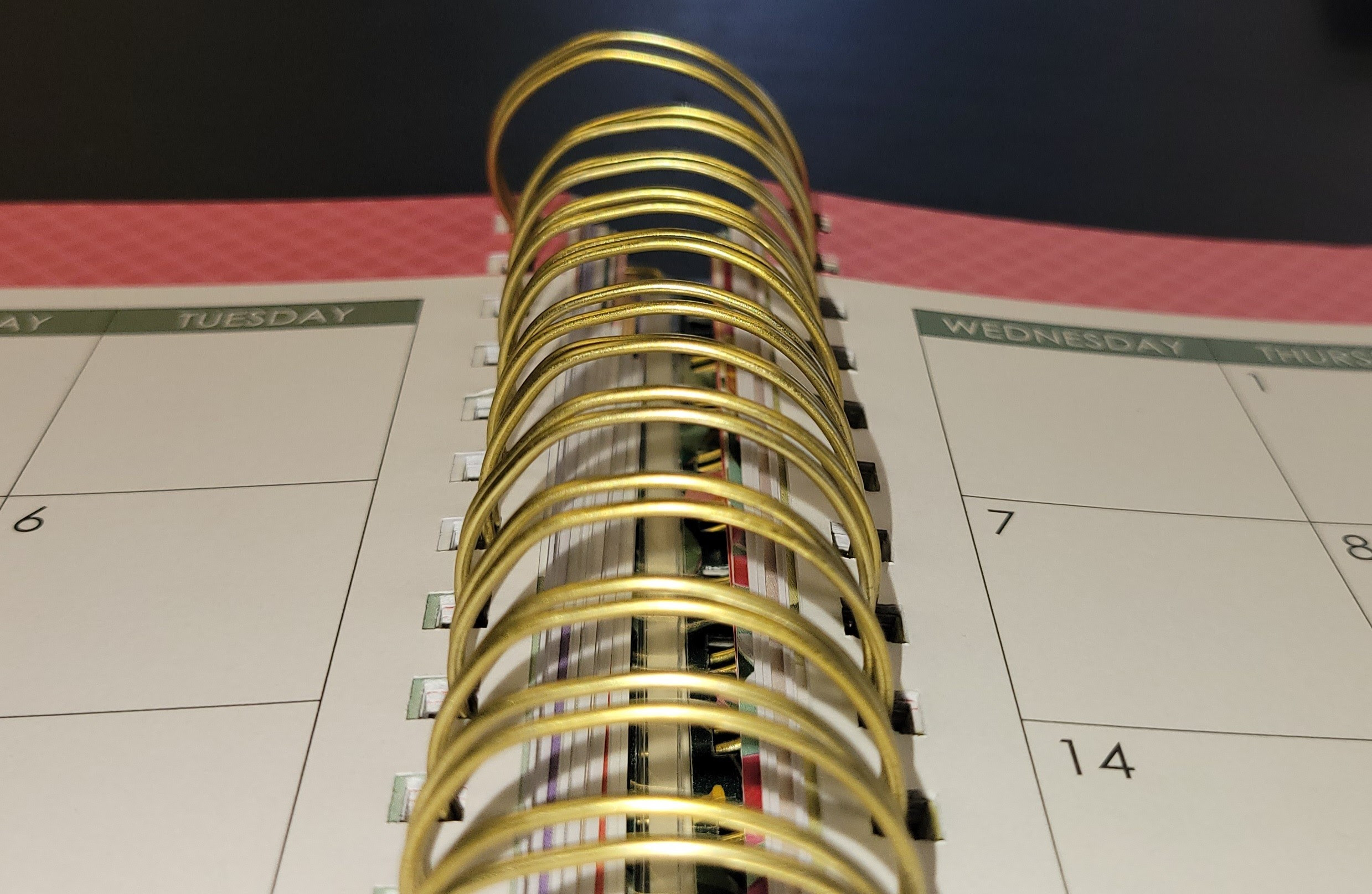
I say the binding is what makes a planner, and the type of binding makes a difference too.


You can always use this, but is this the product you want put out there?
Other alternatives are imported spirals, yes, they are cheaper than a PEL spiral. And less expensive too! But again, is that the product you want to put out there?

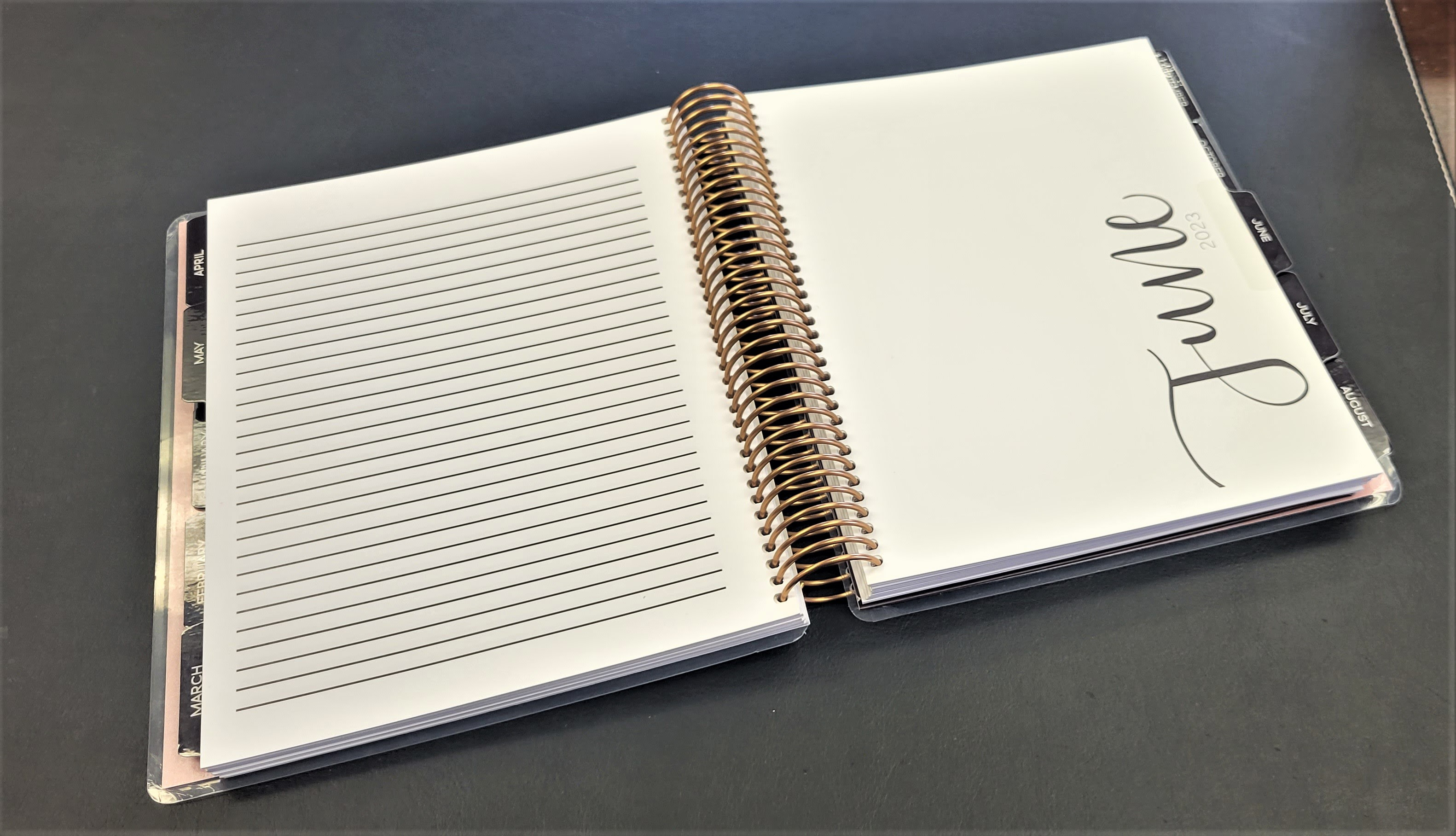
2023 Planner, using PEL Solid Spiral
Yes, we could be bragging about our own product, but it is not a coincidence ALL major planner companies use PEL Spirals…….
Categories Uncategorized

Making Projects Stand Out with Spiral Coil Options

Rainbow Spiral Bundle

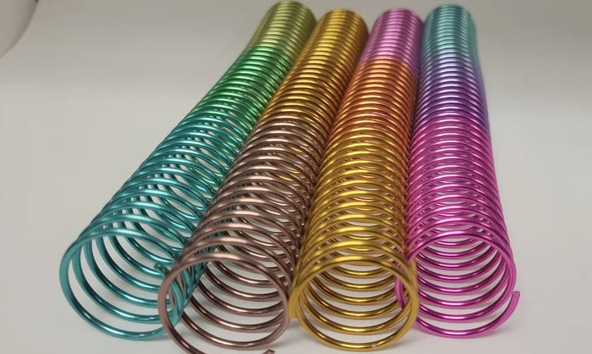
Mechanical binding uses many products, including Wire-O, combs and spiral coils (aluminum spirals, wire spirals and plastic spirals). This article focuses on spiral coils, as they are the most popular and most customizable product within the mechanical binding method. Spiral coils come in several diameters, colors, thicknesses, hole spacings and materials.

Spiral coils are measured by inside diameter, with diameters ranging from 3/16″ (4.76 mm) to 4 ½″ (114.3 mm). Currently, the largest diameter in plastic is 3 ½″ (88.9 mm), and 4 ½″ in wire or aluminum. With diameters, gauge (material) thickness comes into play as each diameter recommends a suggested gauge. But the beauty of spiral coils is there are no “standards.” As mentioned, spiral coils are customizable – it depends on the look you are going for, your budget and your supplier. For example: a 9/16″ (14.29 mm) 2.5:1 (we will cover hole spacing later) may suggest a gauge thickness of .103, but a gauge thickness of .135 can also be used. Customization can be done will all diameters, hole spacings and materials (aluminum, wire or plastic).

Hole spacing, also known as pitch, refers to the number of holes per inch. For example, a 4:1 pitch means that there are four holes for every inch. There are 10 different pitches available – all serving a purpose – depending on the look you are going for and overall thickness of your project. However, no need to worry about having all pitches available, having a couple of them will be enough for most projects. If possible, you should have a 5:1, 4:1 or 2.5:1. A 5:1 pitch is perfect for calendars, short books/binding edge and thin books/projects. It offers a more appealing look, due to holes being closer together. It is something you may want to suggest to your clients, especially when binding short books. A 4:1 pitch can cover a wide range of diameters. It can be used with a ¼″ (6.35mm) coil up to a 2″ (50.8mm) coil. This pitch is one to have in your inventory. A 2.5:1 pitch is great for larger projects. With a 2.5:1 pitch, you will be able to use a 3 ½” (88.9 mm) coil. A wider pitch will make the coil easier to insert on thicker projects. One to consider if you work with projects that call for a 2 1/8″ coil or larger.

There are currently three types of materials being used to manufacture spiral coils: plastic, wire and aluminum. In the 1920s, we had plastic spirals. Wire spirals were introduced in the 1980’s, and in the 1990ss came aluminum spirals.

So, which one is better? This is a question I am often asked, and it is difficult to give a simple explanation. There are a few components to consider: type of binding project, look your client is going for and the client’s budget, just to name a few.

Plastic spirals are great for most binding projects. Plastic spirals come in a variety of colors. About 40 colors are readily available, but custom colors can always be made. Plastic spirals also come in various lengths, ranging from 6 to 40″, depending on your supplier. From all three materials, plastic spirals are the most economical so, if the budget is tight, plastic spirals will be the way to go.

Wire spirals, not to be confused with Wire-O, are single loop spirals, just like plastic and aluminum (yes, same punching and inserting equipment can be used with all three materials). They also come in a variety of colors including custom colors. One common complaint is that the wire spiral material is too thin, and the spiral could distort after heavy use. This issue can easily be resolved with a little customization – a heavier gauge can be suggested. For example, many menu companies are using heavy gauge wire for their projects – .055 gauge with a 7 mm spiral coil. Wire spirals also come in various lengths and pitches.

Aluminum spirals, the newest of the bunch, are becoming more popular. Aluminum spirals have been around for almost 25 years but did not gain popularity until the early 2000s, when planner companies started using them. Aluminum spirals are also in high demand with marketing companies, as they are always looking to stand out with a unique product. Many binderies are making a switch from wire to aluminum, as it is a strong alloy but lighter in weight, allowing them to save in shipping costs. The base color for aluminum spirals is silver or “plain aluminum,” but like the other materials, color can be added. Aluminum spirals, made in the USA, are manufactured from “virgin” aluminum and is an eco-friendly product. Like wire and plastic, aluminum spirals are also single loop continuous coils. Aluminum spirals also offer a wide range of diameters, from 3/16 (4.76 mm) to 3 ½″ (88.9 mm), and they can be manufactured in 10 different pitches.

Mechanical binding offers a wide range of products, not just plastic spirals, and within each of the materials used we also have options. Each binding project is different – each customer is different – and it is up to us to make customers aware of all available mechanical binding options.

?>